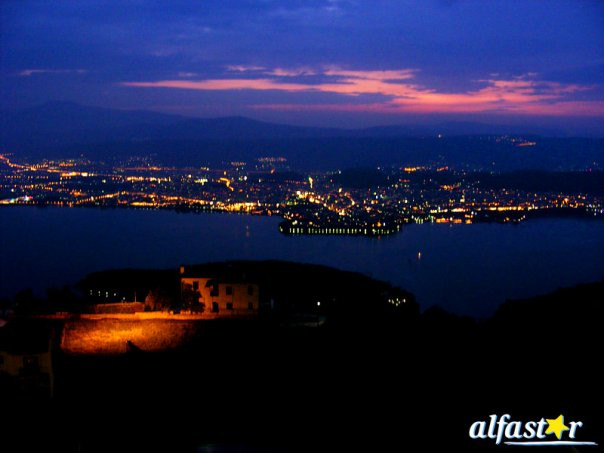
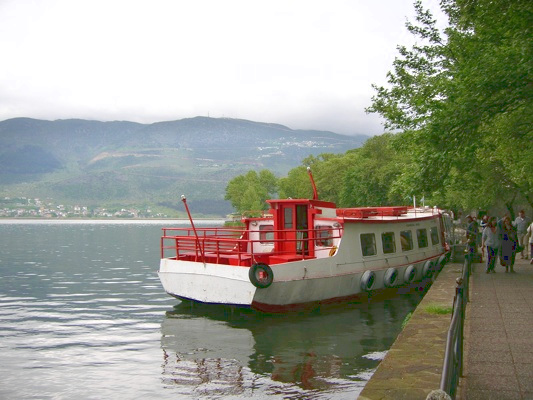
Ioannina is built at an altitude of 470 m., at the western bank of the picturesque lake of Pamvotis. It is the capital city of the homonymous prefecture, but also of the whole province of Epirus. It is an important city and one of the biggest cities of the country.
The name of the city probably comes from the monastery of St. Ioannis the Vaptist. Historians claim that the establishment of the city became by the Emperor Ioustinianos, who built a fortress near Pamvotis lake. In 1082 the city was conquered by the Normad Voimoundos.
In the 1204 with the establishment of the Despotate of Epirus the city was developed a lot ecomically and it was an important cultural centre. Many benefits were given to its habitants. The last despot Karolos B’ Tokkos under the pressure and the threat od Sinan Passa abandoned the city in 1430. The habitants surrendered to avoid the battles and their benefits were continued during the Ottoman period with a peak moment the period of Ali Passia.
At the period of Ali Passia the city developed a lot to every sector and it was one of the most important European cities. There were many schools at that period where many teachers and scholars taughts, such as: Methodios Anthrakitis, Neofytos Doukas, Ioannis Vilaras, Athanasios Psalidas, etc.
Today the city of Ioannina is a modern city with european characteristics, which is full of life and is famous for the entertainment and the nightlife that offers. The history and the tradition are obvious to every ccorner. The old city and the castle remind different periods, where dominate memories of its Byzantine past and but also of mondern history and is an alive memorial place.
The city has two big hospitals, one of which is the university hospital and university. Ioannina has also a large number of night clubs, bars, restaurants, theatres, cinemas, etc. For your stay you will also find many hotels and rental rooms.
The visitors will have the chance to taste the traditional sweets of Ioannina and the delicious traditional cuisine, of which main dishes re pies but also others traditional delicacies.
The region is also famous for its silver art and jewellery that are produced here for many centuries with the same traditional ways.
It worths visiting in the city:
- The picturesque castle with the two citadels which is populated and nowadays
- The picturesque lake of Pamvotis
- The clock in the central square of the 1905
- The Folk Art Museum and the Gallery
- The Tourist kiosk and the theatre
- The Archaeological museum
- The Byzantine museum
- The museum “Arms of the War” of Fotis Rapakousis, in the Castle
- The Folk Art Museum in Aslan mosque
- The old fortress “Litharitsia”
- The Library of Zosimaia
- The City hall
- The park of Pyrsinella, an important green park to the city
- The municipal Gallery
- The Mansion of Misions of the 1844
- The Metropolitan church of St. Athanasios
- The churches of St. Aikaterini of the 1771, St. Marina, Archmandreio, St. Nicolas of the Market which was renovated in 1837, the church of Perivleptos of the 1839, the church of St. Nicolas of Kopani and the new-built church of St. Georgios in the centre of the city
- The holy school of the mosque of Veli